

Laboratory Drying Oven Buying Guide
Compare gravity, forced-air, and vacuum or gas-protection drying ovens by the airflow, temperature and atmosphere your sample needs.
Where to start
Choose the oven configuration by what the sample can tolerate. Compare gravity and forced-air cabinets for atmospheric drying. Look at the separate vacuum or gas-protection listing when the method explicitly calls for that environment.
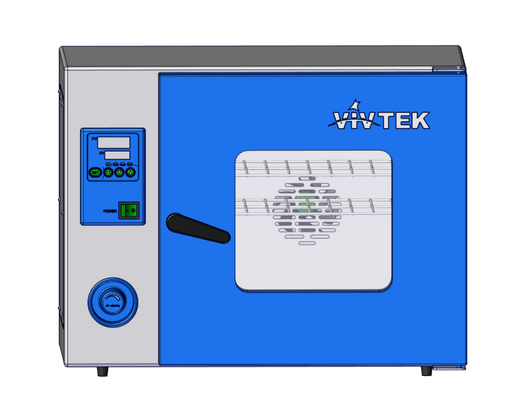
Gravity and forced-air models
-
DO200 gravity drying oven
The gravity series table lists 56, 96, 140 and 240 L chamber volumes. Check the chamber dimensions and shelf count for the number of trays you need.
-
DO250 forced-air drying oven
The DO250 forced-air series lists 30, 80, 140 and 240 L chambers. Compare the usable shelf dimensions and installed depth along with nominal volume.
-
DO300 forced-air drying oven
The DO300 forced-air series also lists 30, 80, 140 and 240 L chambers. Verify the model’s temperature rating and installation dimensions when comparing it with DO250.
Vacuum or gas-protection configuration
-
VO200 vacuum or gas-protection drying oven
The VO200 table lists 24, 50, 90, 125 and 216 L chambers. Confirm the intended vacuum or gas configuration and compatible connections for the selected cabinet.
What to include in your quote request
- Identify the sample and trays, the maximum load, the desired chamber temperature and time, and whether direct airflow is acceptable.
- Give the largest sample or fixture dimensions. Ask for usable shelf dimensions, clearances and temperature data at the intended setpoint and loading.
- For vacuum or gas-protection work, give the required atmosphere and request compatible connections, limits and documentation for the exact configuration.
Specifications and sources
Specifications and options are from the linked Solution Instruments product listings. Confirm model-specific configuration and included accessories before ordering.